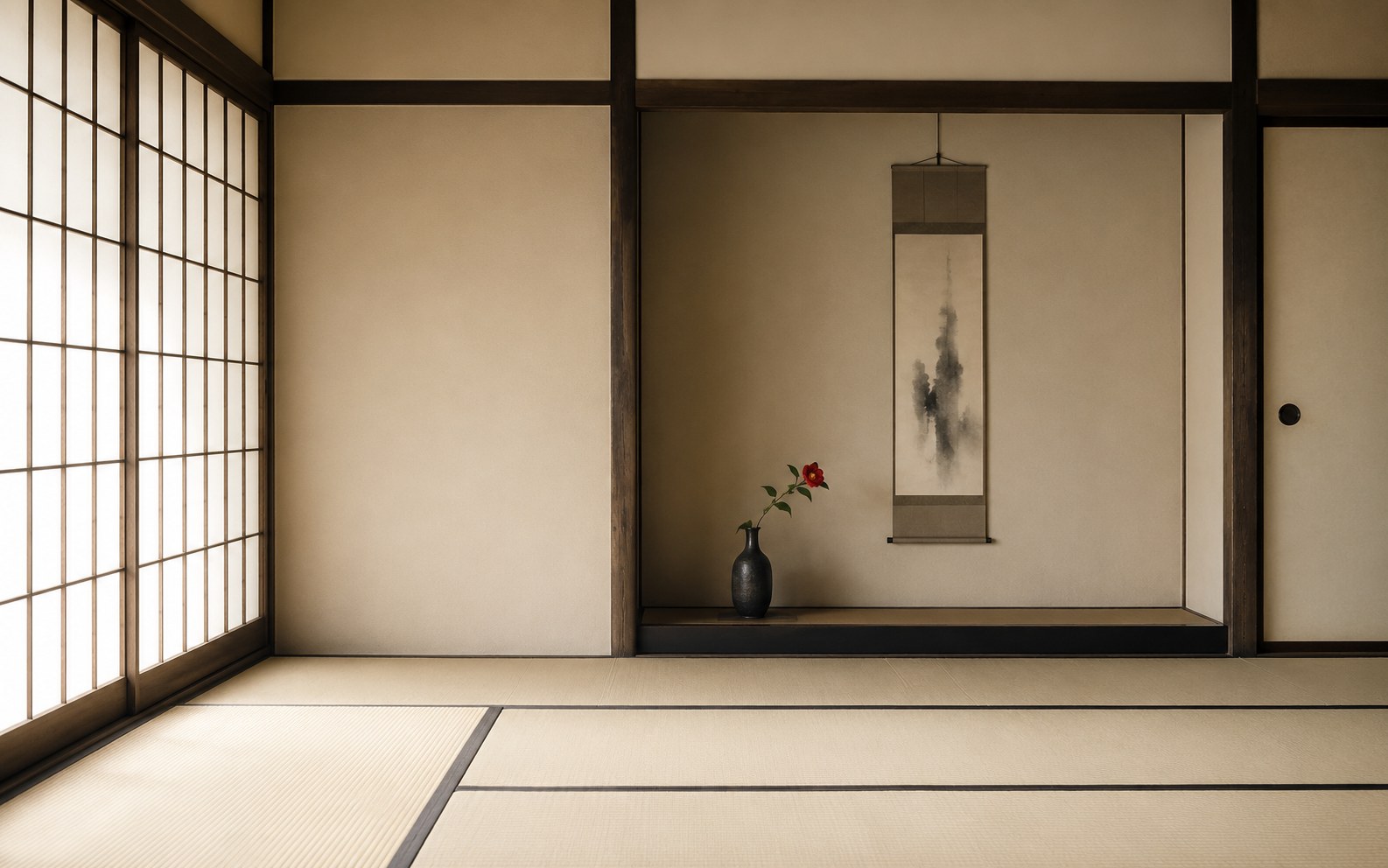
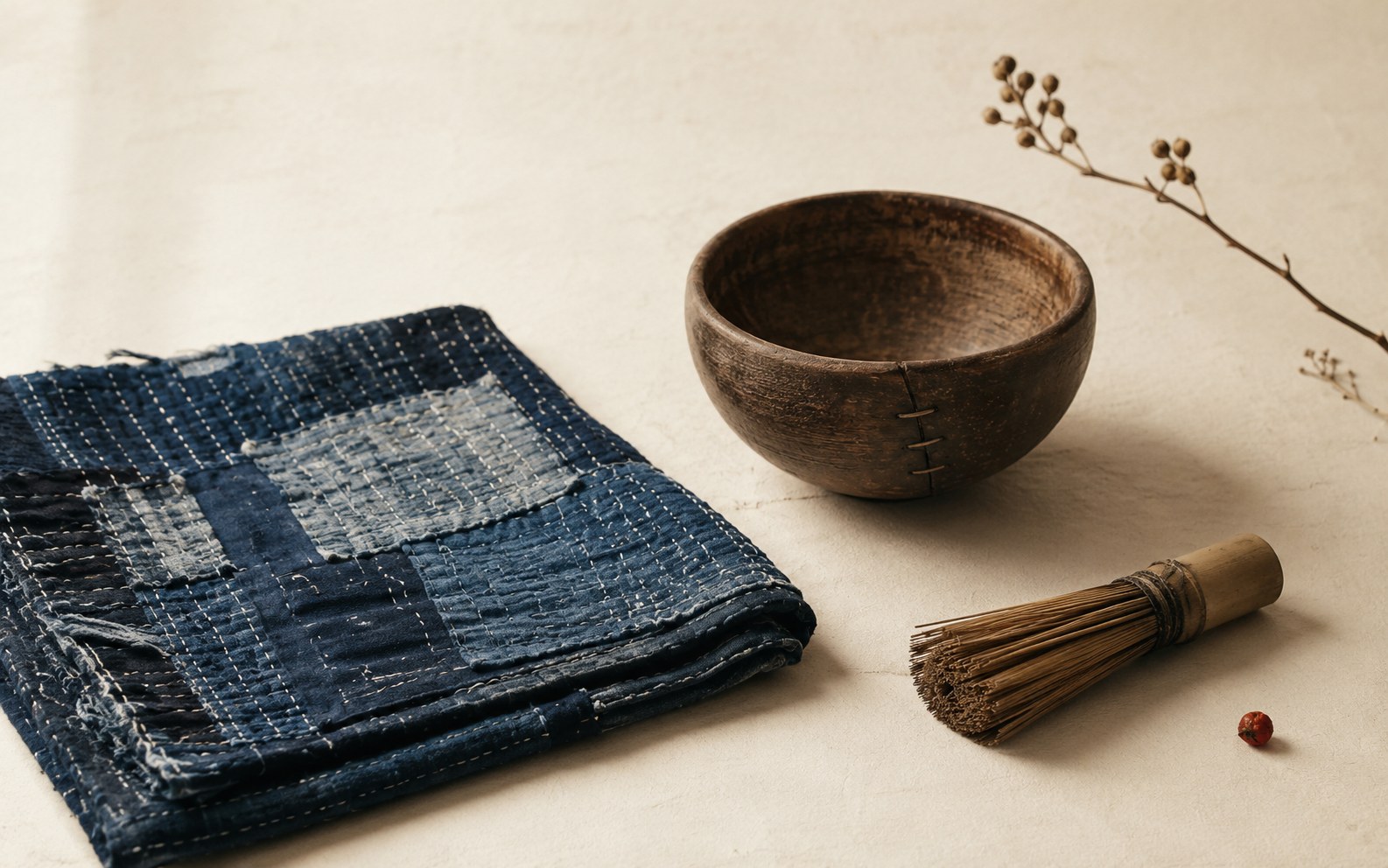
Tag: japanese-philosophy
All the articles with the tag "japanese-philosophy".
-
Komorebi (木漏れ日): Meaning and How to Write It
By K. YamaUpdated:Komorebi, 木漏れ日, is literally 'sun leaking through trees.' What each kanji means, the spelling 木洩れ日, and how to brush the word so it looks like light.
Continue reading → -
Omotenashi (おもてなし): Hospitality Starts With a Scroll
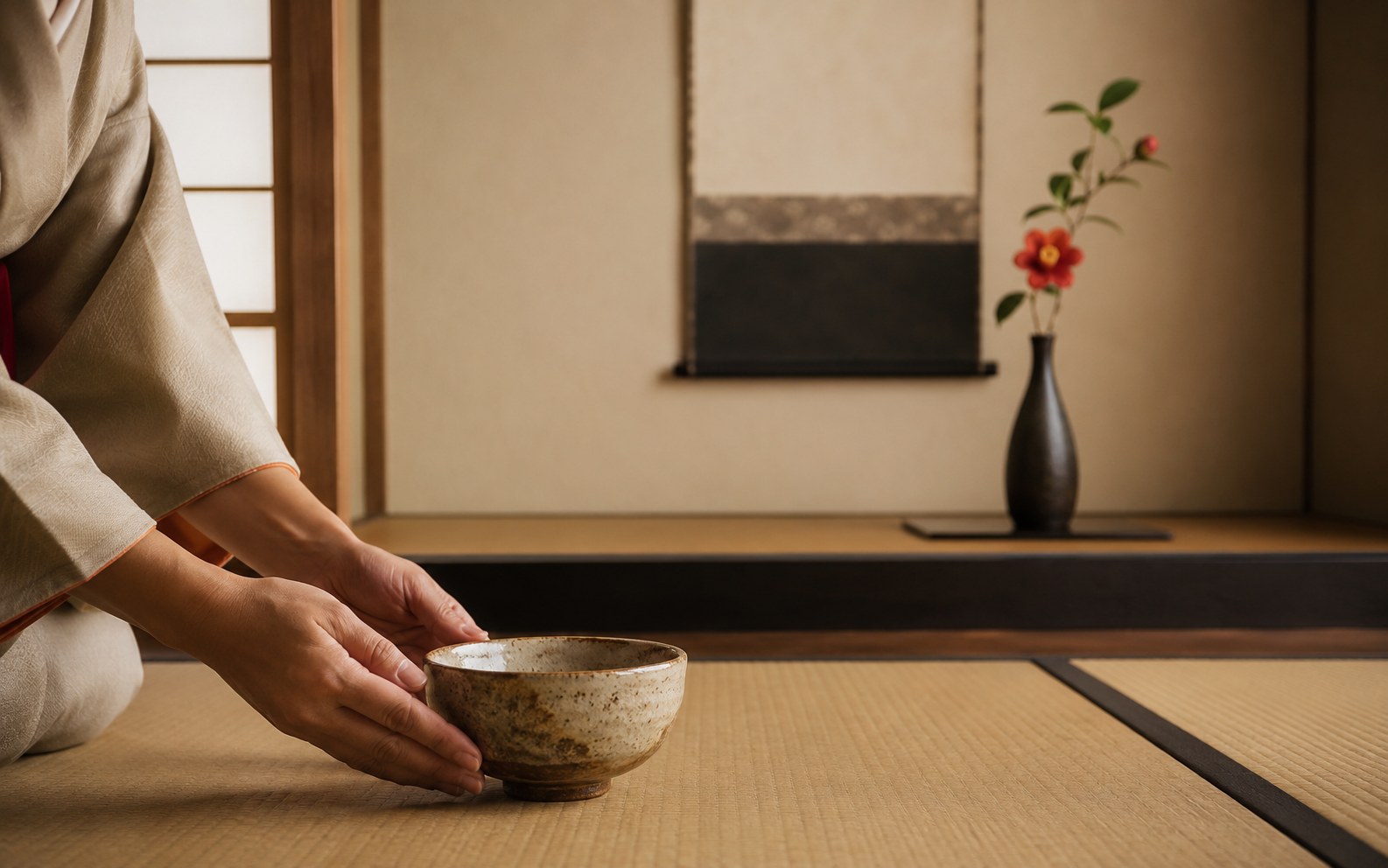
By K. YamaUpdated:In a tea room, omotenashi begins with a scroll chosen for one guest on one day. How the word is written, what hosts hang, and why it isn't customer service.
Continue reading → -
Yūgen (幽玄): Meaning, Ink, and How to Write It
By K. YamaUpdated:Yūgen, 幽玄, is the beauty of depth that is suggested, not shown. What its two dark kanji mean, how ink tones express it, and how to brush the word.
Continue reading → -
Mono no Aware (物の哀れ): Meaning, Kana & How to Write It
By K. YamaUpdated:Mono no aware is the bittersweet feeling of things passing. What its characters say, why the old kana spelling matters, and how calligraphy makes the idea visible.
Continue reading → -
Japanese Aesthetics Glossary: 14 Terms Every Japan Lover Should Know
By K. YamaUpdated:A clear, accurate glossary of 14 Japanese aesthetic terms — wabi-sabi, ikigai, ma, yūgen, mono no aware, kintsugi, and more — with the myths corrected.
Continue reading → -
Ma (間): The Japanese Art of Negative Space and the Pause
By K. YamaUpdated:Ma (間) is Japan's meaningful emptiness in space AND time — not 'negative space' but the charged interval holding music, rooms, and the page together.
Continue reading → -
Mottainai: The Japanese Idea That's More Than 'Don't Waste'
By K. YamaUpdated:Mottainai is usually flattened to 'don't waste.' It really means the intrinsic worth of a thing is being lost — closer to grief than to thrift. Explained.
Continue reading →