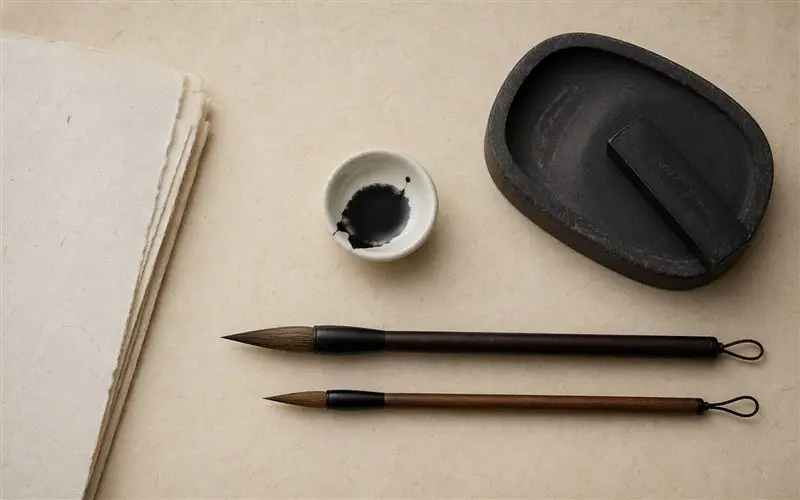
Japanese Calligraphy for Beginners: A Complete Guide (2026)
A practitioner's complete introduction to Japanese calligraphy (shodō): its history, the five styles, the tools you need, and a realistic 30-day practice plan.
書 sho · to write
You do not need talent or expensive tools to begin shodō, Japanese calligraphy. You need a brush, ink, paper and a clear first step. These guides take you from holding the brush to a daily practice, in plain English, one step at a time.
In reading order: start at the first card and work along.
A practitioner's complete introduction to Japanese calligraphy (shodō): its history, the five styles, the tools you need, and a realistic 30-day practice plan.
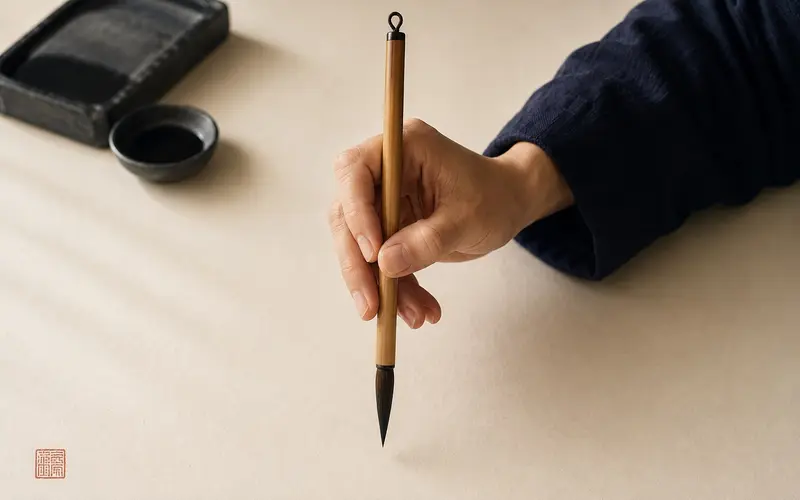
Most shodō goes wrong before the brush touches paper — because of how the brush is held. A Japanese calligrapher's step-by-step guide to the correct grip.
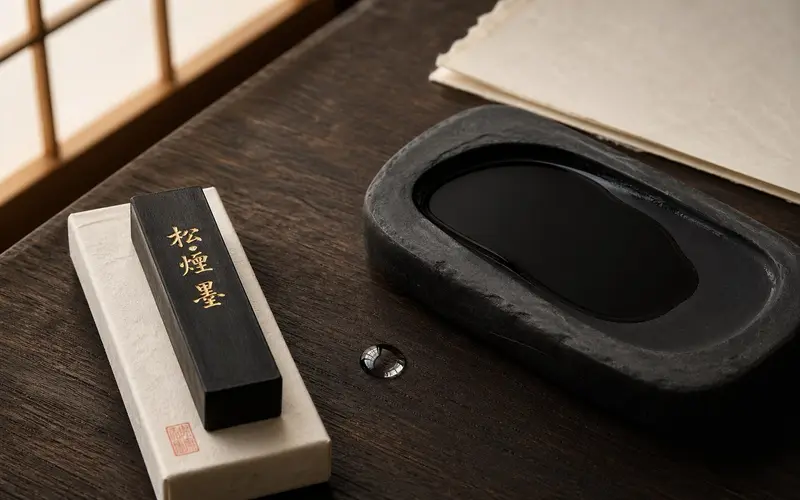
Sumi ink covers everything from $4 bottles to $400 inksticks under one name. A practitioner's guide to what sumi actually is and what beginners should buy.
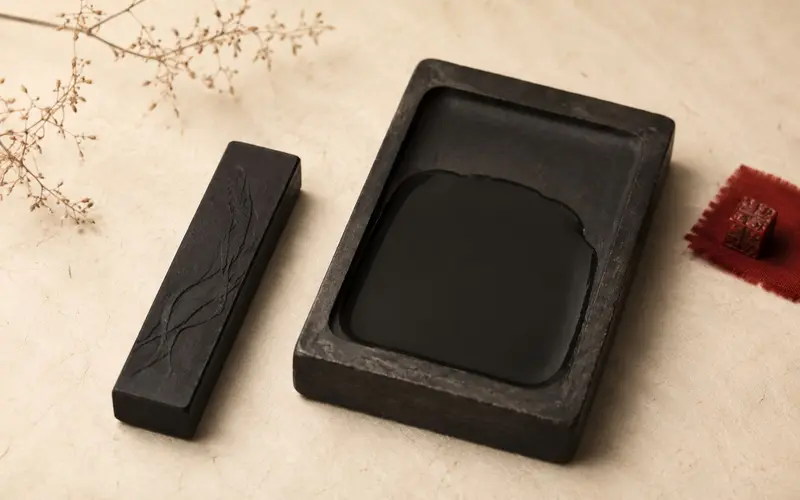
Grinding your own ink takes ten minutes and changes everything. How to grind a sumi inkstick on a suzuri — and why calligraphers still do it by hand.
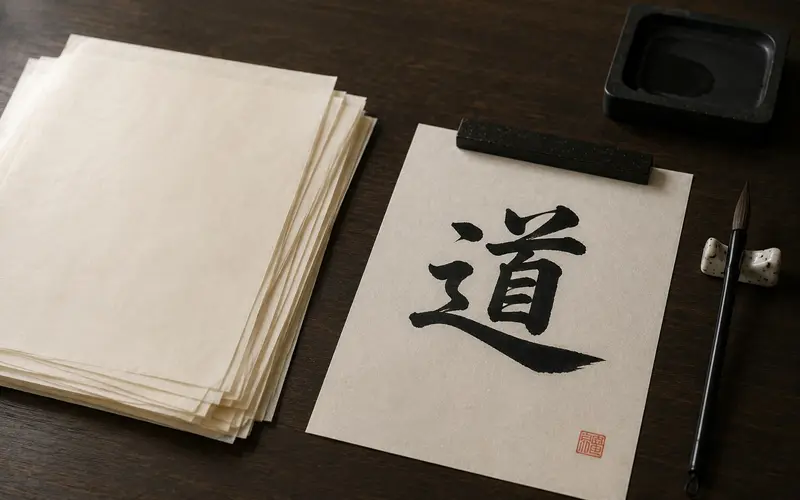
Hanshi is the standard practice paper for Japanese calligraphy. What it is, which side to write on, how to store it, and what to buy first.
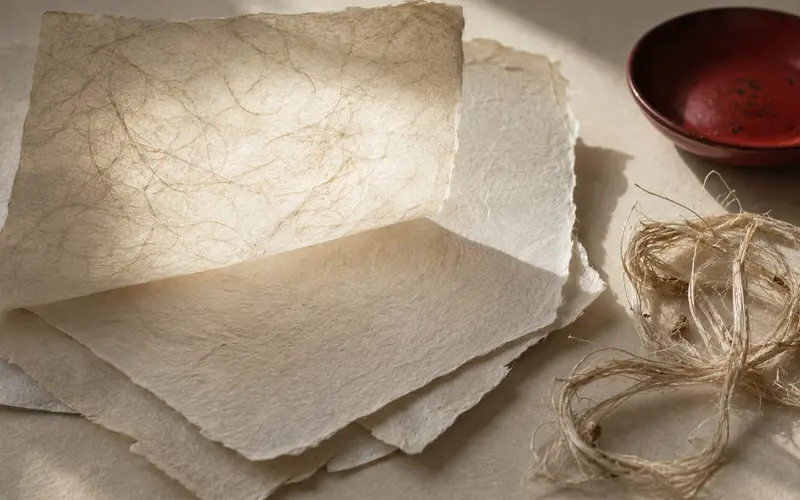
Why calligraphers fuss over paper: kōzo, mitsumata and gampi, ink bleed and dry-brush, hanshi vs gasenshi, and which side of the sheet to write on.
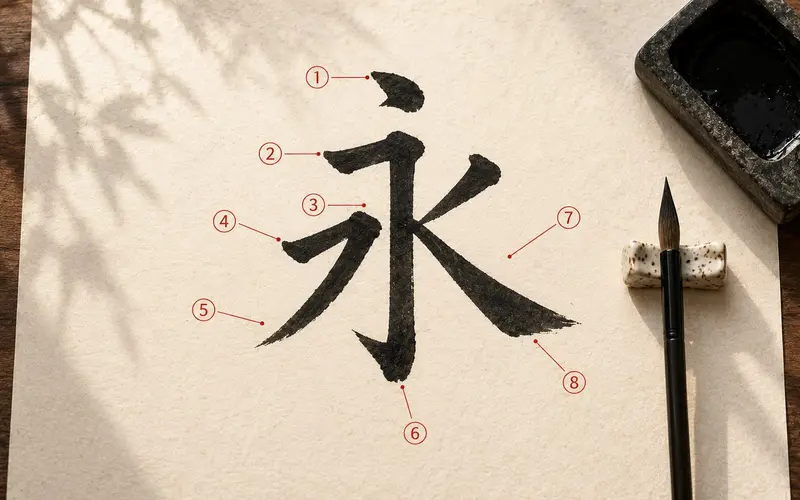
The kanji 永 (eternity) contains all eight basic brushstrokes of Japanese calligraphy. A practitioner explains the Eight Principles of Yong and how to use them.
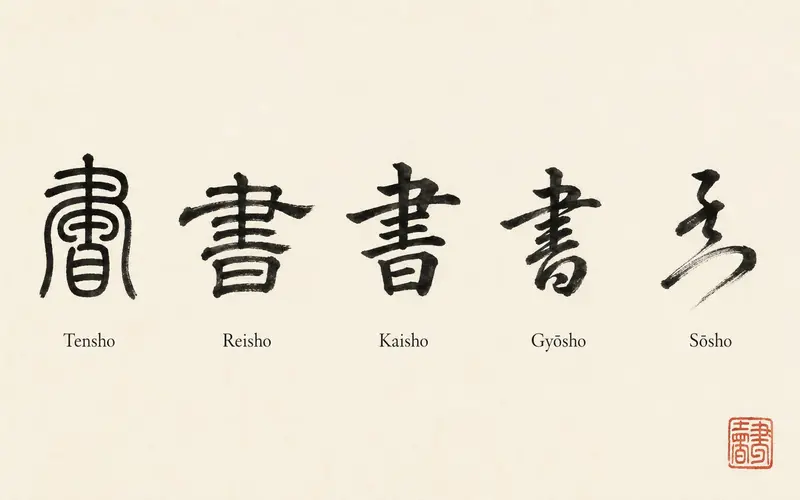
Kaisho, gyōsho, sōsho, reisho, tensho — the five classical styles of Japanese calligraphy explained, compared, and ranked for beginners by a practitioner.
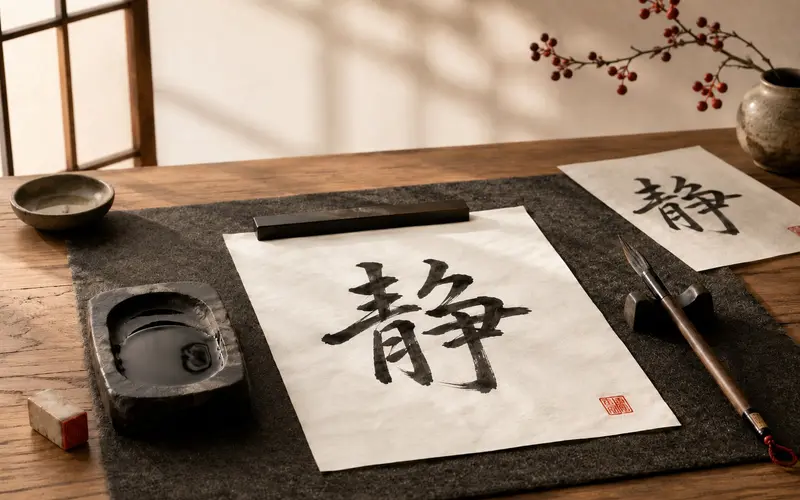
Twenty minutes a day beats three hours on Sunday. A Japanese calligrapher's honest daily shodō practice routine — the setup, the warm-up, and what to actually do.
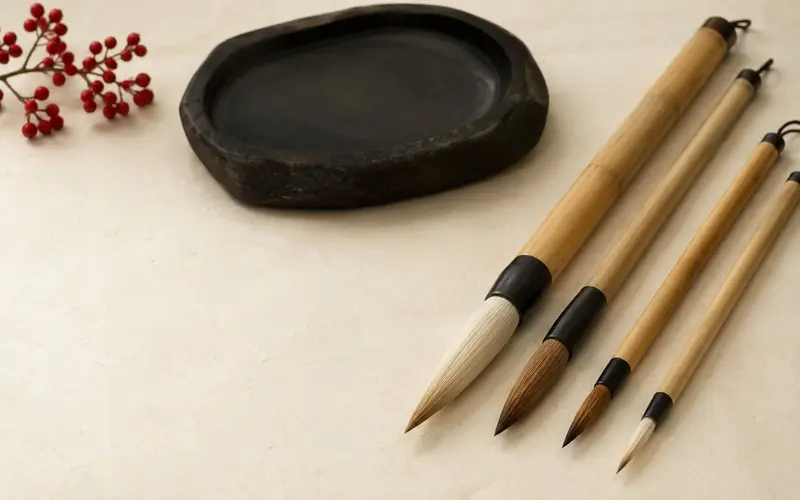
Dried ink is what kills a calligraphy brush. How to clean, reshape, and store a fude so a good brush lasts years instead of being ruined in a month.
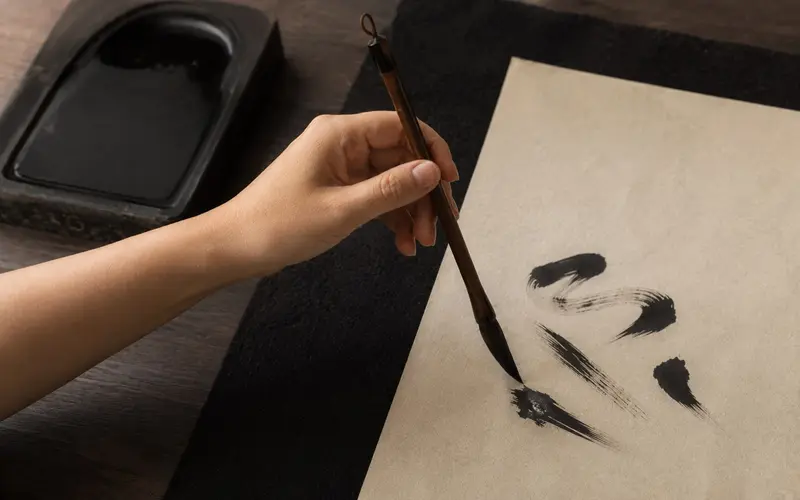
Can you do Japanese calligraphy left-handed? Yes. Why shodō is taught right-handed, why the brush makes switching easier than a pen, and how a lefty should practise.
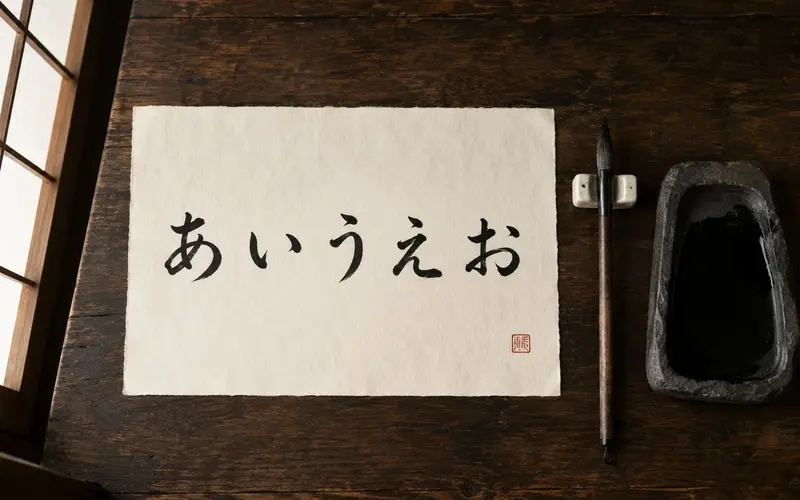
Hiragana is the flowing 46-character script at the heart of written Japanese, born from cursive kanji. Where it came from, and why it's beautiful to write.
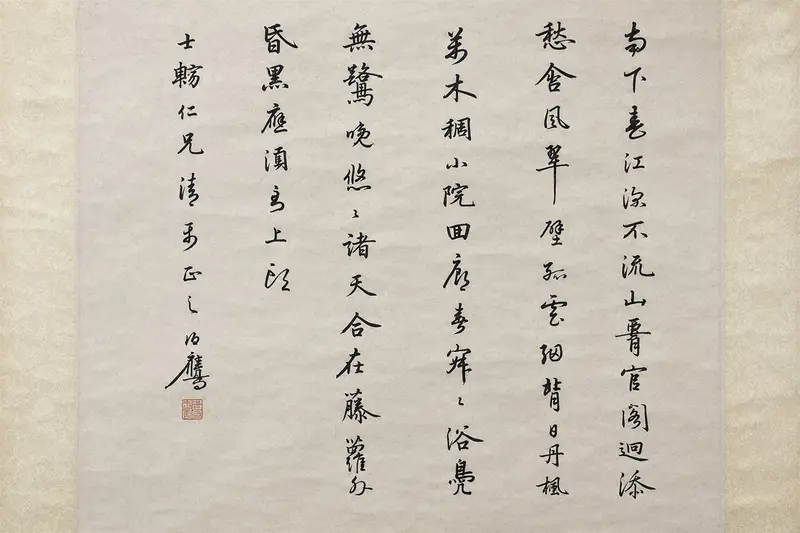
A hanging scroll reads top-to-bottom and right-to-left, and ends in red. How to read a Japanese calligraphy scroll, and what those vermillion seals actually mean.
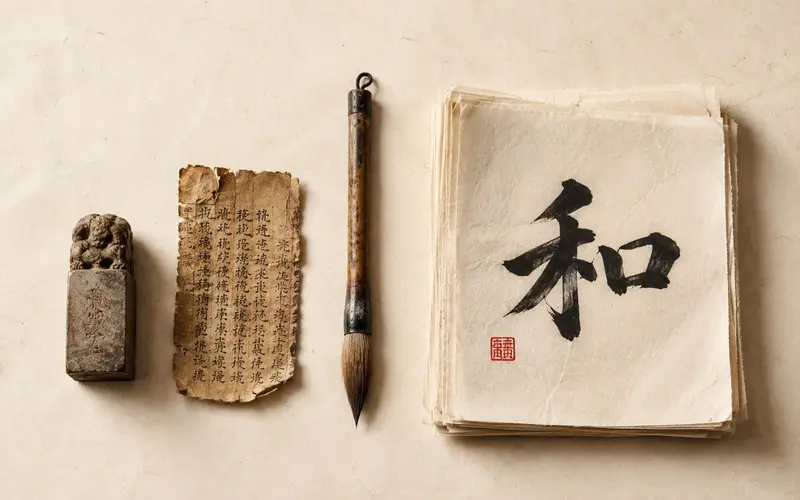
Japanese calligraphy has 1,500 years of continuous tradition. A Japanese calligrapher's guide to the people, periods, and turns that made shodō what it is today.