Kanji Meanings
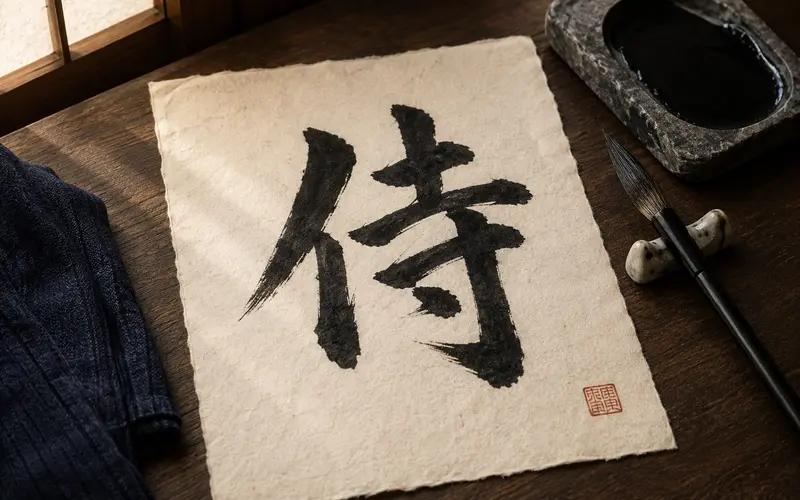
Samurai Kanji (侍): What It Really Means & How to Write
The samurai kanji (侍) does not mean warrior — it means 'one who serves.' What the character actually says, and the right kanji if warrior is what you want.
46 articles with this tag.
The samurai kanji (侍) does not mean warrior — it means 'one who serves.' What the character actually says, and the right kanji if warrior is what you want.
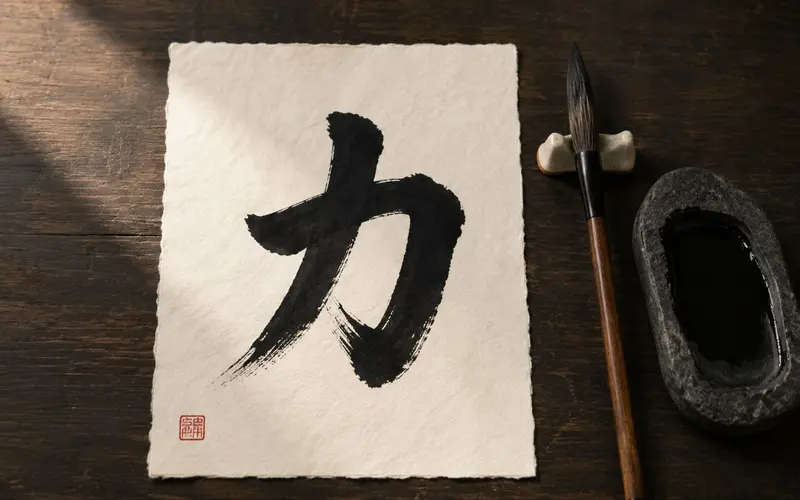
力 (chikara) means strength, and at two strokes it hides nothing. Why the simplest characters are the hardest to write — and how to get this one right.
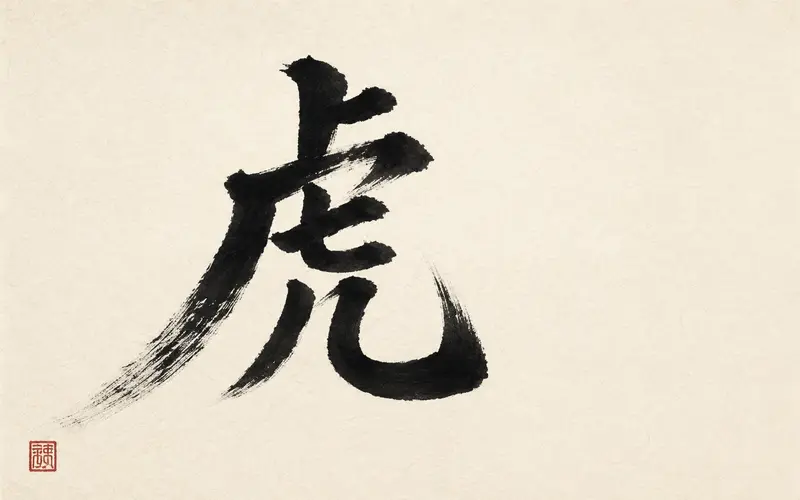
虎 (tora) means tiger: courage, protection, and the dragon's eternal partner in art and tattoo. Meaning, the 龍虎 pairing, and how to write it.
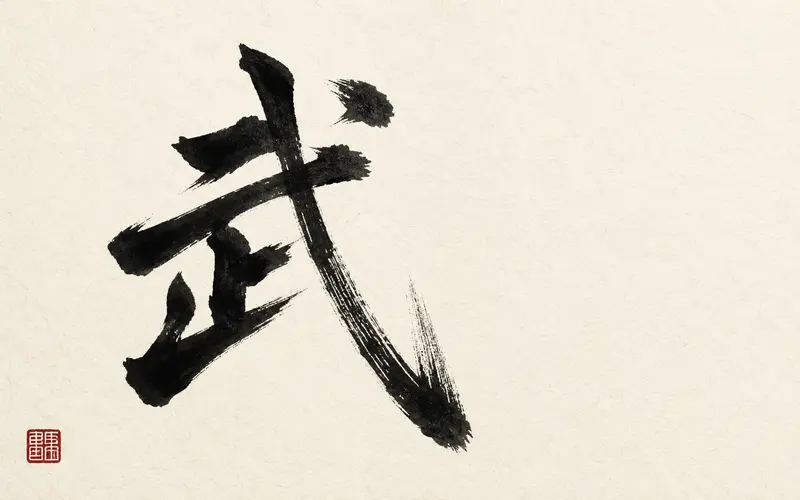
武 is the real 'warrior' kanji — the bu of bushidō and budō — and it may mean 'to stop the spear.' Its two readings of power, and how to write it.
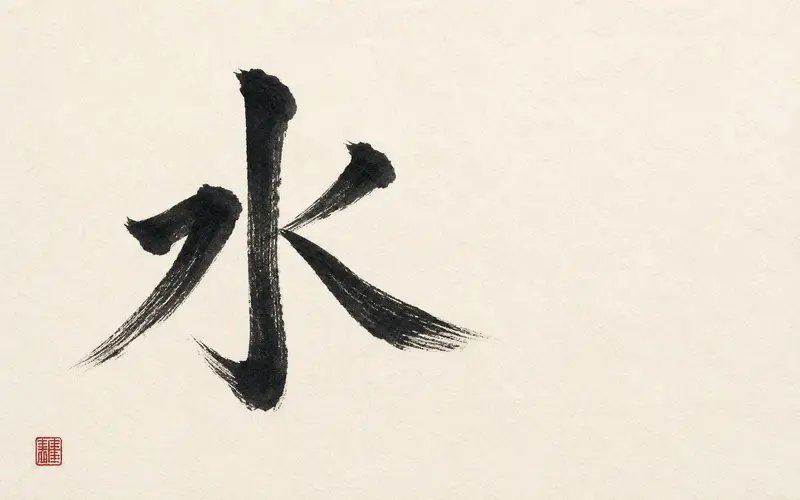
The kanji 水 (mizu) means water: a four-stroke picture of a flowing stream, and one half of every drop of sumi ink. Meaning, philosophy, and brushwork.
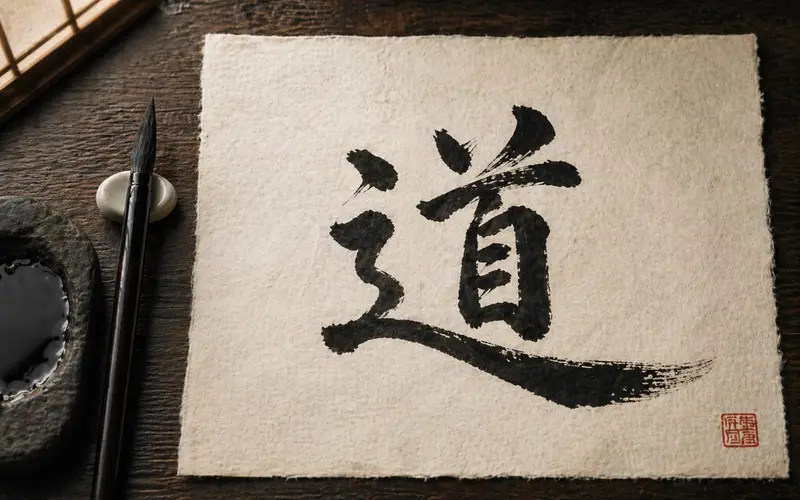
The kanji 道 (dō) ends karate, judo, aikido, and shodō alike. What 'the way' really means in Japanese, and how to write the character that names a lifetime.
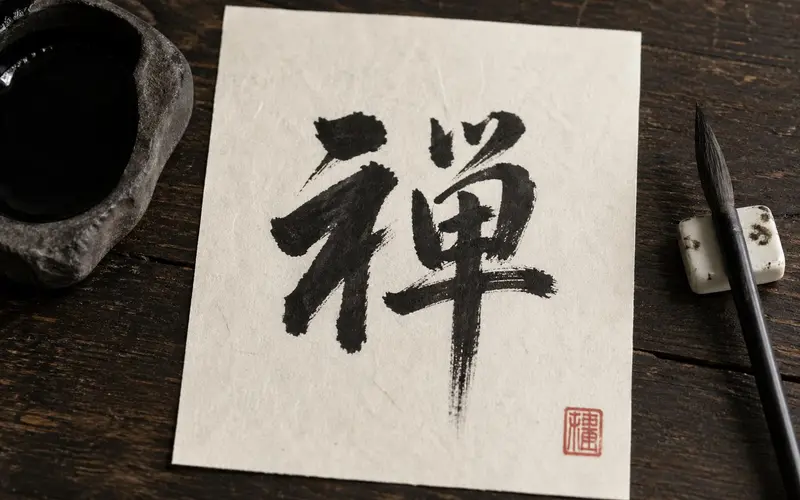
Zen kanji (禅) means far more than 'calm' — it names a school, a practice, and a centuries-long argument about the mind. Real meaning and how to write it.
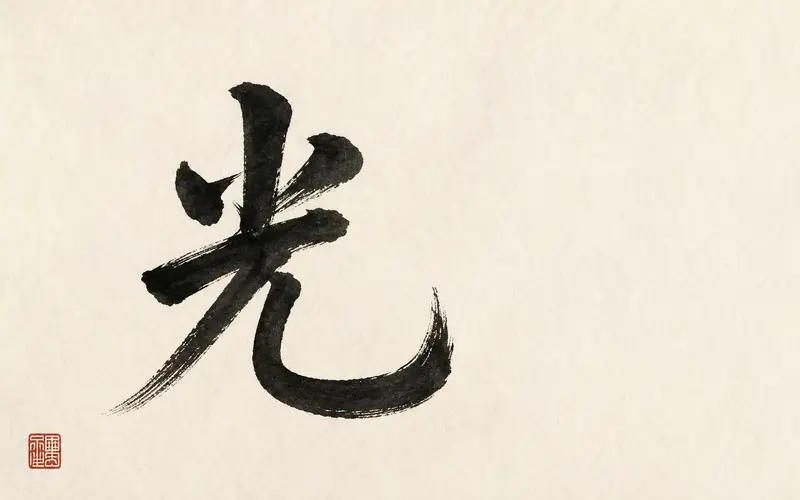
光 means light — a fire carried by a person, the hikari of moonlight and glory, and the name of Japan's Shining Prince. Its meaning and how to write it.
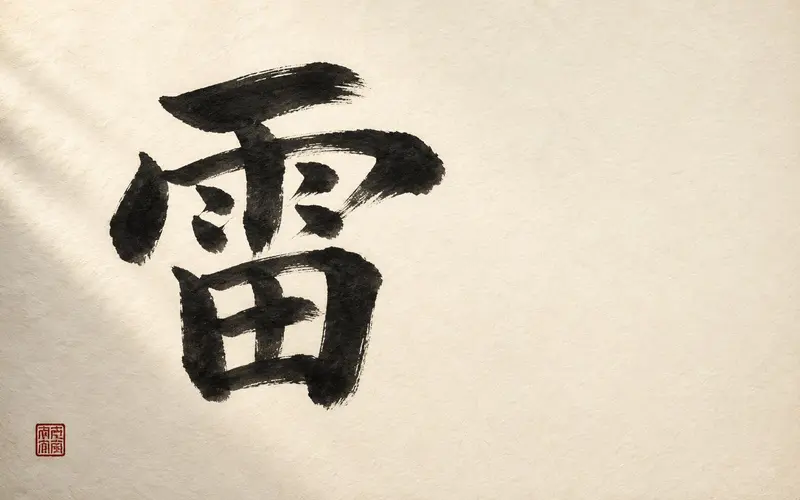
雷 means thunder: rain over a field, the drum-beating god Raijin, and a word that began as 'the cry of the gods.' Its meaning, readings, and writing.
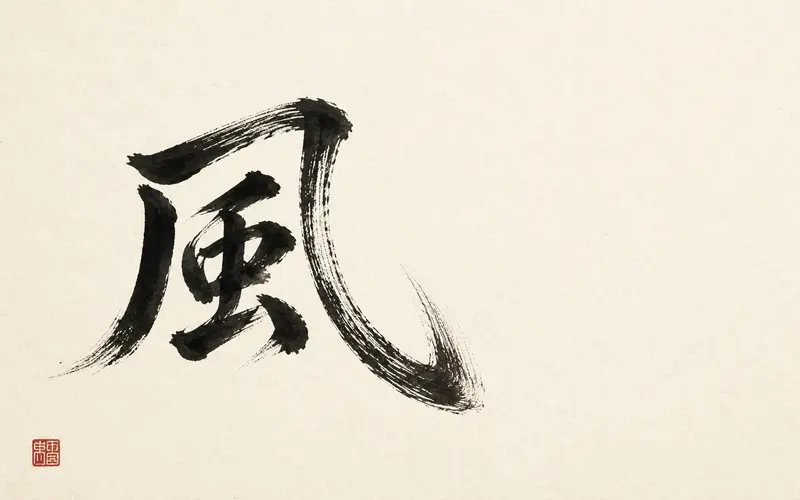
風 (kaze) means wind — and also style, manner, and atmosphere. The 'wind' of 風林火山: what it carries in Japanese, and how to write it with movement.